PPGI Coil Packaging, Handling, and Storage: Avoiding Damage in Gulf Yards
Here's something that catches a lot of buyers off guard: a perfectly good coil of PPGI can leave the factory in great condition and still end up damaged before it's even used — not because the material was bad, but because of how it was packed, moved, or stored once it arrived. A little care at this stage saves a lot of frustration later, so let's walk through the basics.
Why This Matters More in the Gulf
Heat, humidity, and dust make storage conditions here tougher on coated steel than in milder climates. Condensation forms easily when temperatures swing between hot days and cooler nights, dust and sand can scratch coated surfaces during handling, and intense sun exposure can affect exposed coil faster than you'd expect. None of this is a problem if the coil is packed and stored properly — but skip a few basics and you can end up with rust, scratches, or edge damage before the coil even reaches your production line.
Good Packaging: What to Look For
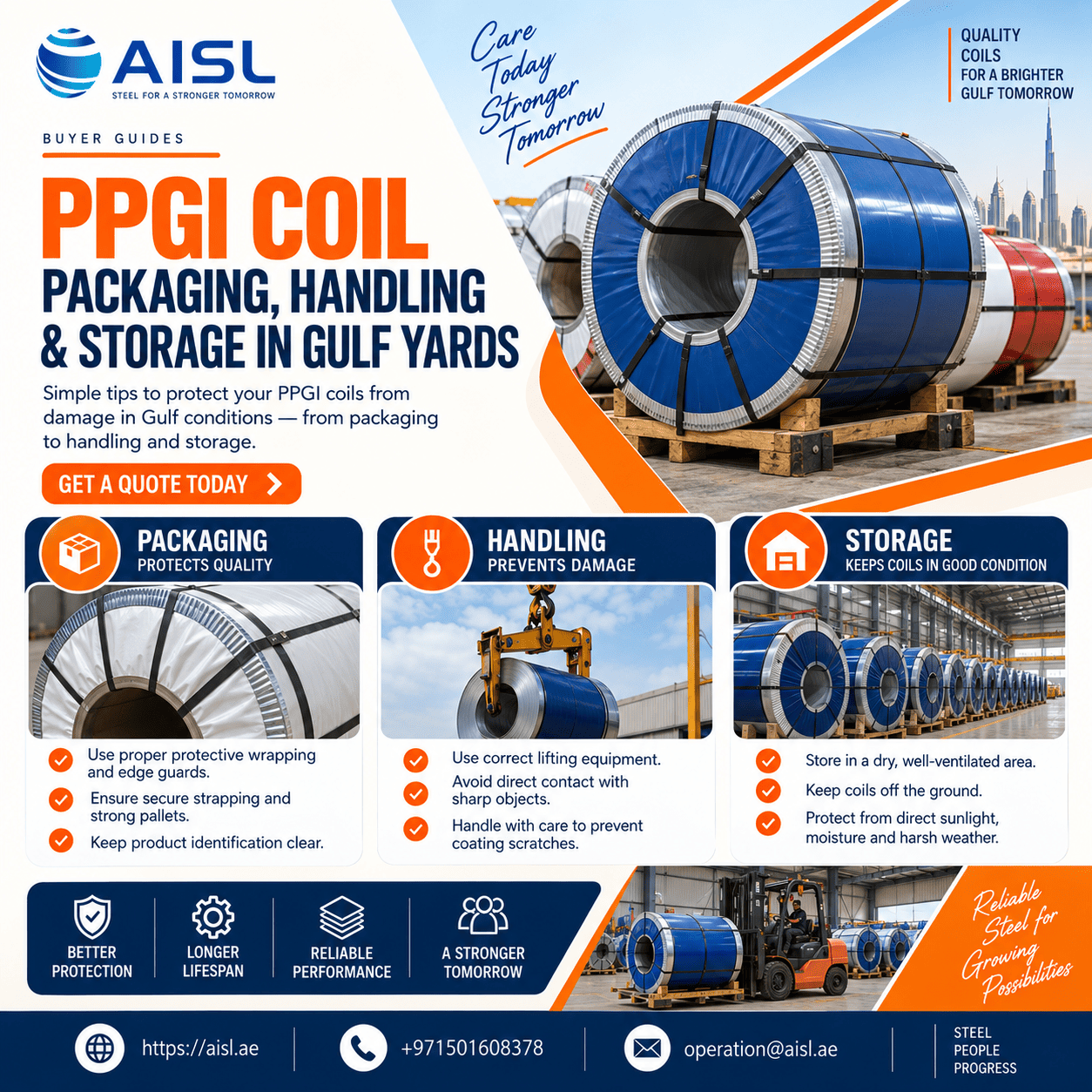
A properly packed coil should have a few things in place before it ever leaves the factory. It should be wrapped with moisture-resistant packaging to keep humidity away from the coating. It should have edge protectors on the coil ends, since bare edges are the most vulnerable point for both physical knocks and corrosion. And it should have a clear label showing the batch number, so you can match it to the mill test certificate later if you ever need to.
If a coil arrives with damaged, torn, or missing wrapping, that's your first sign it may have picked up moisture or dust during transit — worth inspecting closely before accepting the shipment.
Handling: The Small Mistakes That Cause Big Problems
Dragging or dropping coils. It sounds obvious, but rough handling during unloading is one of the most common causes of dents and edge damage. Coils should always be lifted with proper equipment, not dragged across a yard floor.
Using the wrong lifting gear. Slings or hooks that aren't suited to coil handling can crush or deform the edges. A proper coil lifter or padded sling protects the material during every move.
Stacking coils incorrectly. Coils stacked without proper spacers or support can put uneven pressure on the ones underneath, leading to deformation over time, especially with heavier coils sitting for weeks before use.
Handling coils in direct rain or heavy dust without cover. Even a short exposure during unloading can let moisture or grit get under the wrapping if it's not resealed properly afterward.
Storage: Keeping Coil in Good Shape Until You Need It
Store indoors or under cover whenever possible. A simple shaded shed or covered yard area makes a big difference compared to leaving coil out in direct sun and rain.
Keep coils off the ground. Using pallets, timber, or steel supports prevents moisture from the ground working its way into the bottom of the coil, especially after rain or during humid nights.
Avoid stacking too high. Excess weight on lower coils over long storage periods can cause flattening or deformation, particularly for lighter-gauge material.
Rotate stock — first in, first out. Coil sitting in storage for months is more likely to develop condensation issues than coil used within a few weeks of arrival. Using older stock first keeps your inventory moving and reduces long-term storage risk.
Check on coils periodically if they'll be stored for a while. A quick visual check every few weeks catches wrapping damage or early signs of moisture before it becomes a real problem.
A Simple Checklist Before You Accept Delivery
Before signing off on a coil delivery, it's worth a quick look at a few things: is the wrapping intact with no visible tears? Are the edge protectors still in place? Is there any visible moisture, staining, or rust starting at the edges? Does the batch number on the label match your paperwork? Catching an issue at delivery is a lot easier to resolve than discovering it weeks later once the coil is already in production.
Good Coil, Packed and Handled Right, from the Start
Arabian Iron and Steel LLC (AISL) manufactures PPGI, GI, PPAZ, and PPAL coil at our Continuous Color Coating Line in Umm Al Quwain, UAE, and every coil we ship leaves with proper moisture-resistant packaging, edge protection, and clear batch labelling — because good coil deserves to arrive in the same condition it left our facility.
If you'd like to know more about how we pack and ship coil for your project, contact our team for a quote.