Common PPGI Coil Defects and How to Avoid Them
If you've ever installed a roof or wall panel that looked perfect on day one, only to see it fade, bubble, or rust within a couple of years, you've probably run into one of a handful of common PPGI defects. The good news is that almost all of them come down to the same root cause: the coil wasn't specified or made correctly in the first place. Once you know what to look for, most of these problems are easy to spot and avoid.
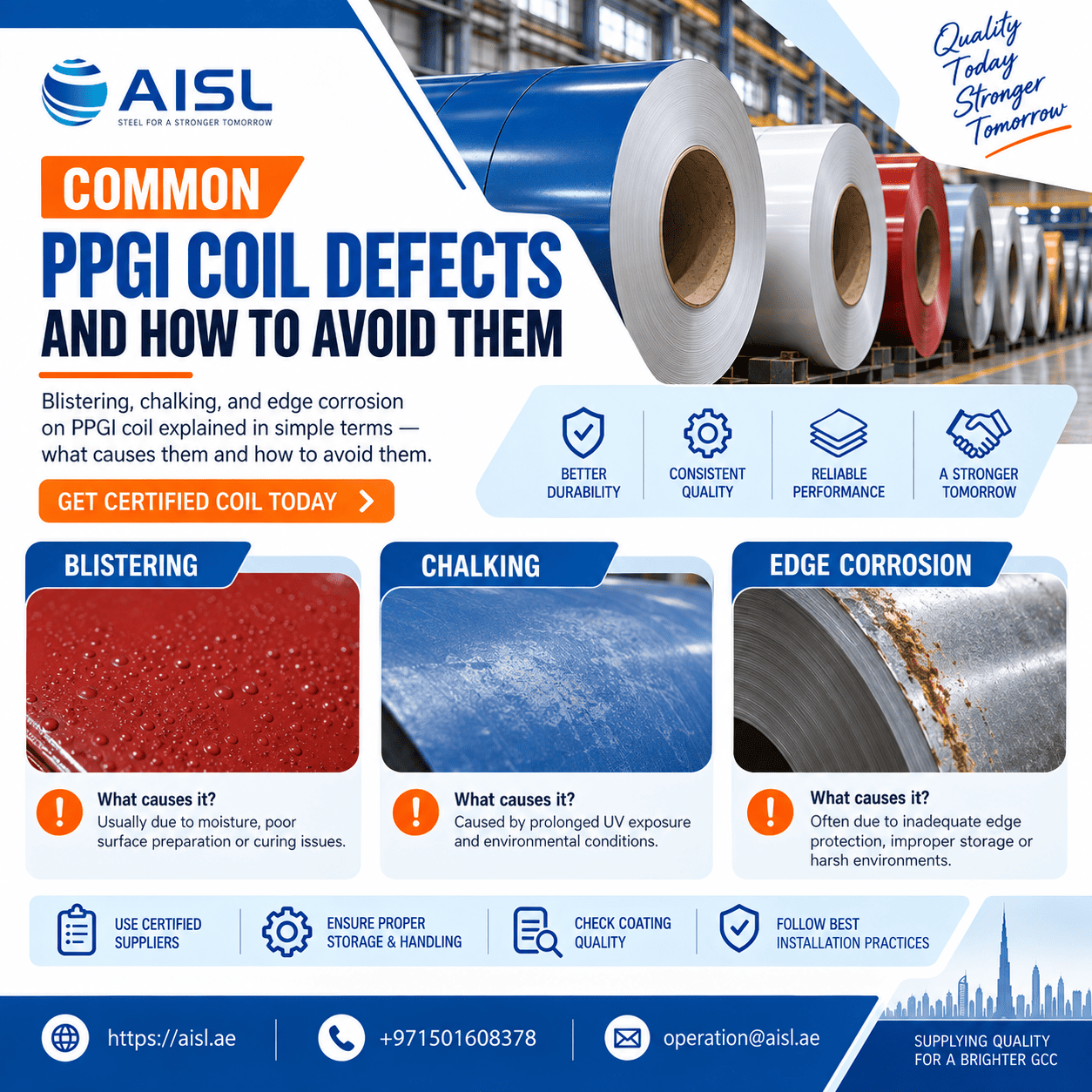
Blistering
Blistering shows up as small bubbles under the paint surface, sometimes just a few millimetres wide, sometimes larger patches. It happens when moisture or trapped gas gets between the coating layers, usually because the paint wasn't cured properly during manufacturing, or because the coil picked up moisture during storage before the paint fully set.
How to avoid it: Buy from a manufacturer with proper oven-curing controls on their coating line, and ask how the coil is stored and packaged before it ships. A reputable supplier will happily explain this — if they can't, that's worth noting.
Chalking
Chalking is that dull, powdery residue you sometimes see on an older painted roof if you run your hand across it. It's caused by the paint's resin breaking down under long-term UV exposure, and it's basically a sign the coating is wearing out from sun damage faster than it should.
Some chalking over many years is normal for any painted surface. The problem is when it happens early — within a couple of years instead of a couple of decades — which usually means a lower-grade paint system was used for a job that needed something tougher, like PVDF instead of standard polyester.
How to avoid it: Match the paint system to how much sun the roof or wall will actually get. In the UAE's heat, don't default to the cheapest coating option for anything highly visible or long-lasting.
Edge Corrosion (Rust Creeping in from the Cut Edge)
This is the rust line you sometimes see creeping in from the cut edges of a sheet, even when the rest of the panel looks fine. It happens because cutting a coil exposes bare, unprotected steel at the edge, and if the zinc coating underneath is too thin, that exposed edge starts rusting faster than the rest of the sheet.
How to avoid it: This comes down to zinc coating weight. A heavier zinc coating (like Z275 instead of Z100) gives the edges much better natural protection, since the zinc keeps sacrificially protecting the exposed steel even after cutting. For coastal projects especially, don't cut corners here — literally.
Delamination (Paint Peeling Off in Sheets)
Delamination is when the paint actually separates and peels away from the metal underneath, rather than just fading or chalking on the surface. It's usually a sign of poor adhesion between the paint and the primer, or between the primer and the metal — often caused by the surface not being cleaned or treated properly before painting.
How to avoid it: A simple tape-test on a sample coil tells you a lot here. Stick a piece of tape firmly on the coating, pull it off sharply, and see if any paint comes with it. If it does, that coil isn't going to hold up.
Colour Mismatch Between Batches
This one isn't about the coating failing — it's when two coils of the "same" colour turn out to look slightly different once installed side by side. It happens when a supplier doesn't tightly control colour consistency between production runs.
How to avoid it: For large orders, especially anything installed as one continuous roof or wall, ask your supplier how they maintain colour consistency across batches, and consider ordering everything for one project from a single production run where possible.
The Simple Rule Behind All of This
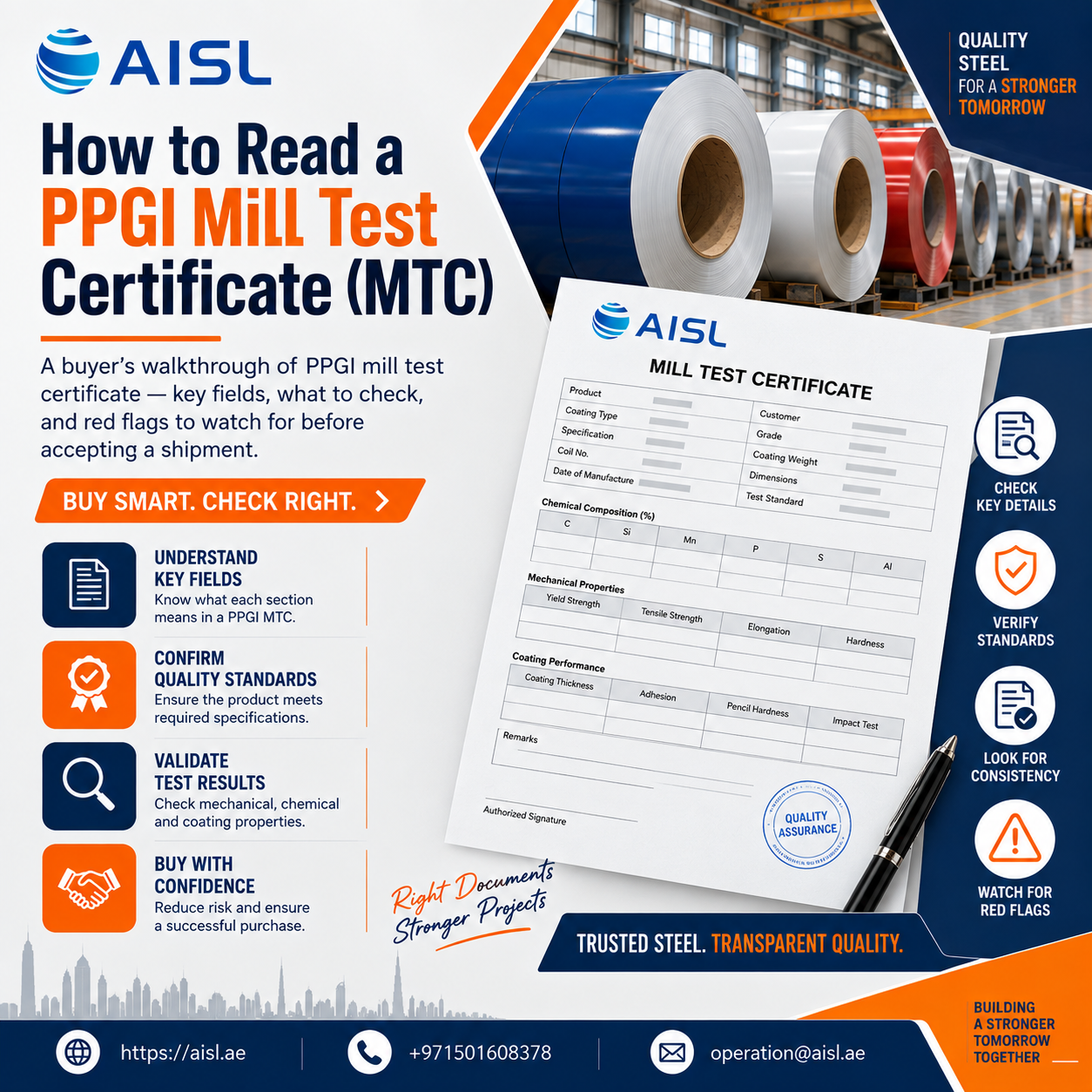
Nearly every one of these defects traces back to one of two things: an underspecified coating (wrong zinc weight or paint system for the job) or a supplier without tight quality control on their production line. Asking for a mill test certificate and a sample coil before a big order solves most of this before it ever becomes a problem on site.
Coil You Can Trust, Batch After Batch
Arabian Iron and Steel LLC (AISL) manufactures PPGI coil at our Continuous Color Coating Line in Umm Al Quwain, UAE, with controlled curing, tested zinc coating weights, and consistent colour matching across every batch. We're happy to provide a sample coil and mill test certificate before you commit to a full order.
If you want coil that won't give you any of these headaches down the line, contact our team for a quote.