This guide compares PIR and PUF cores briefly, then explains why the coil specification behind the panel matters just as much as the insulation choice inside it.
Sandwich panel manufacturers and contractors across the UAE and GCC are increasingly comparing PIR (Polyisocyanurate) and PUF (Polyurethane Foam) core insulation when specifying panels for cold storage, cladding, and roofing projects. Most of the conversation around this choice focuses entirely on the foam core — thermal performance, fire rating, density. What gets far less attention is the coated steel skin on either side of that core, even though it is the layer actually exposed to weather, moisture, and daily wear.
PIR vs PUF: The Core Comparison
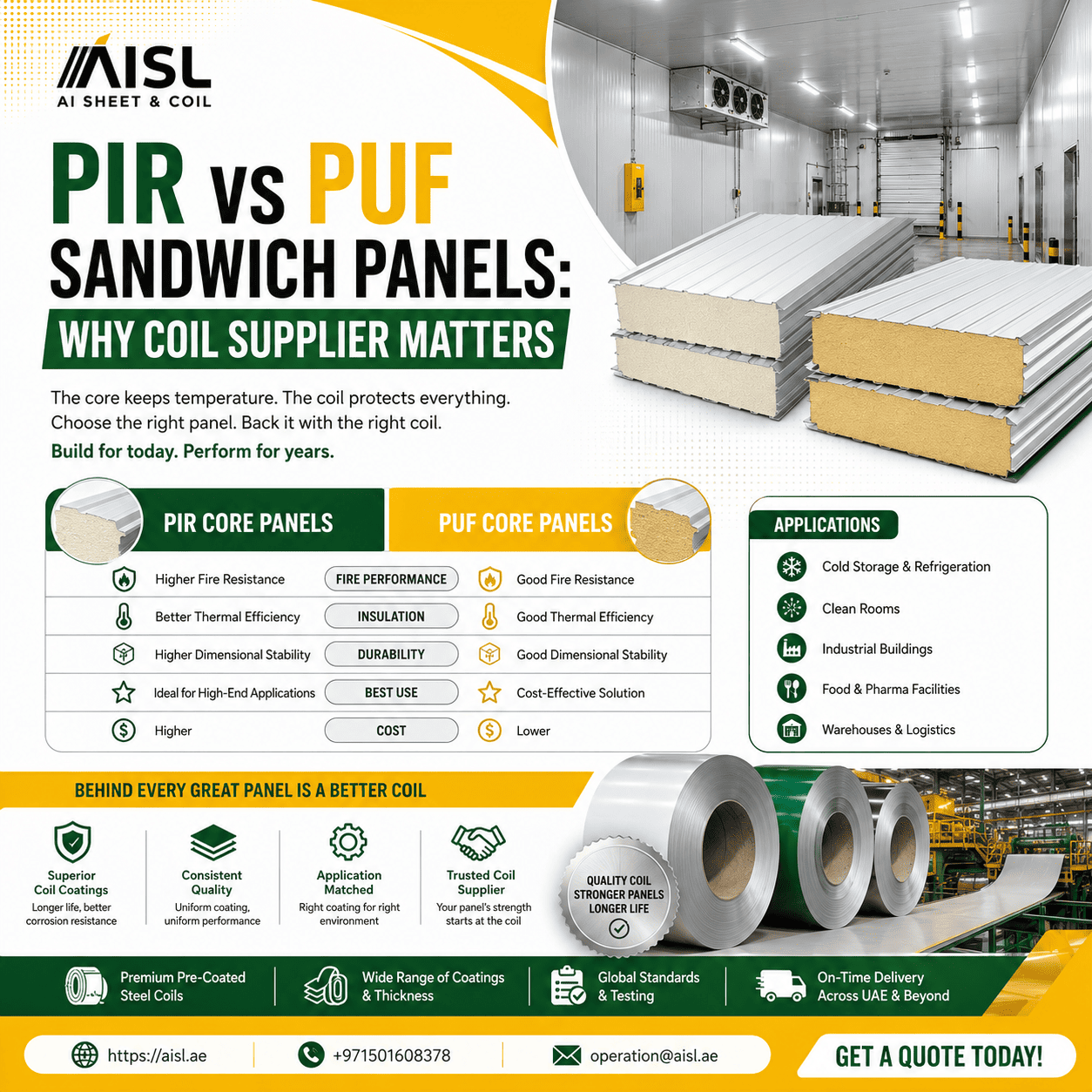
PUF (Polyurethane Foam) has been the long-standing standard core material for sandwich panels across the region, offering solid thermal insulation at a competitive cost. It remains a reliable choice for general cladding, partition walls, and standard warehouse roofing where extreme thermal or fire performance is not the primary requirement.
PIR (Polyisocyanurate) is a chemically modified version of polyurethane foam that delivers meaningfully better thermal insulation per millimetre of thickness, along with improved fire resistance and slower flame spread. This makes PIR the preferred core for cold storage facilities, food processing plants, and projects where insulation efficiency directly affects operating cost — a thinner PIR panel can match or exceed the thermal performance of a thicker PUF panel, which also reduces overall structural load and material handling.
For most standard commercial or residential cladding, PUF remains cost-effective. For cold chain, pharmaceutical storage, or fire-sensitive applications, PIR is increasingly the specified default.
Why the Core Alone Doesn't Determine Panel Lifespan
A sandwich panel's insulation core is protected on both faces by coated steel sheet — and that sheet, not the foam inside it, is what actually faces rain, UV exposure, humidity, and physical contact throughout the panel's service life. A high-performance PIR core sealed inside an under-specified or poorly coated steel skin will still fail early, because moisture ingress through a corroding or delaminating outer sheet compromises the insulation from the outside in, regardless of how good the core itself is.
This is why panel manufacturers and contractors comparing PIR versus PUF should give equal attention to the coil specification on either face of the panel — coating type, zinc weight, and paint system all affect how long the finished panel actually performs in the field.
What to Specify on the Coil Side of a Sandwich Panel
Coating Type: PPGI vs PPAZ
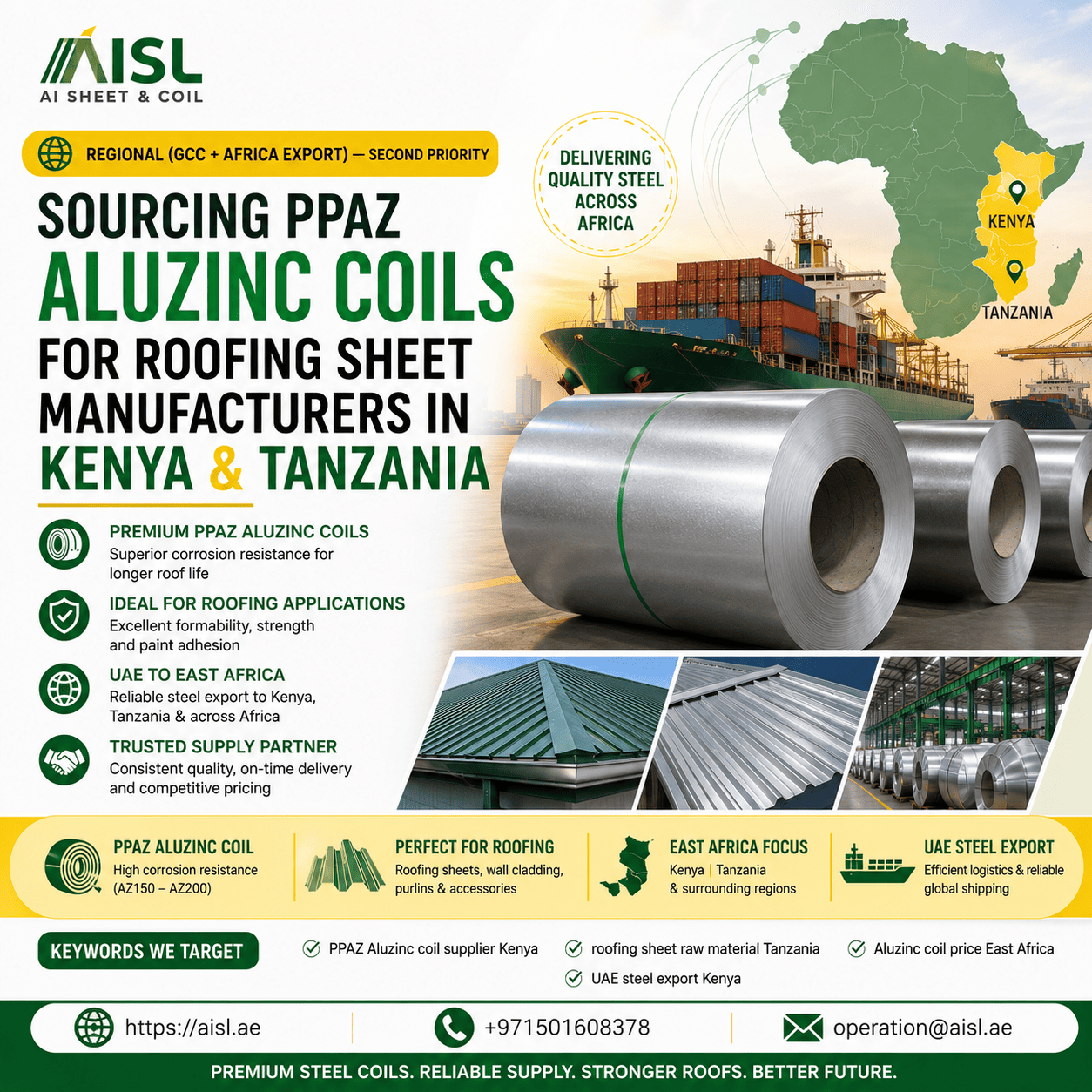
PPGI is the standard face material for general cladding and roofing panels in inland and moderate-exposure environments. For cold storage and coastal-adjacent facilities, PPAZ (Aluzinc) offers stronger corrosion resistance, which matters considerably on cold storage panels where internal condensation and temperature cycling place additional stress on the steel skin.
Zinc Coating Weight
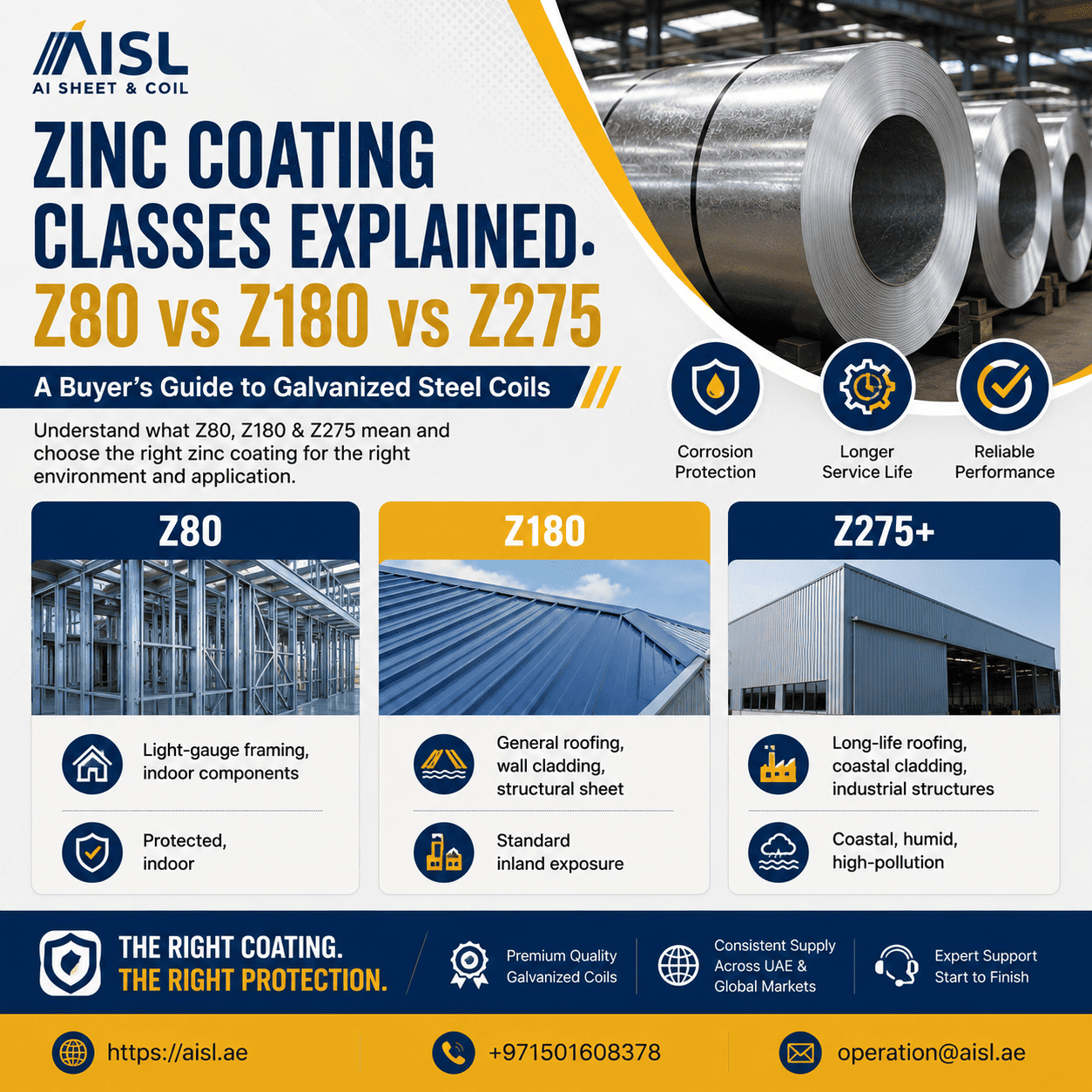
A panel destined for a coastal food processing facility should not be faced with the same light coating class used on an inland partition wall. Matching zinc or Aluzinc coating weight to the panel's actual operating environment — humidity, temperature cycling, chemical exposure — is as important a decision as choosing between PIR and PUF in the first place.
Paint System for Interior-Facing Sheet
Cold storage and food processing panels often specify a plastisol or specialised interior coating on the inward-facing sheet, since this surface is exposed to washdown chemicals, moisture, and temperature swings inside the storage environment. A standard exterior-grade coating on the interior face is a common specification gap that leads to premature interior corrosion, even when the outer face performs perfectly.
Consistent Coil Supply Across Production Runs
Panel manufacturers running continuous production lines need coil that matches specification consistently, batch after batch. Variation in coating thickness or colour between shipments creates visible mismatches across panels installed on the same building — a quality issue that reflects on the panel manufacturer, not the coil supplier, but originates entirely from inconsistent raw material.
The Real Comparison Isn't PIR vs PUF Alone
For contractors and facility owners specifying sandwich panels, the more complete question isn't simply "PIR or PUF" — it's whether the coated steel enclosing that core is specified correctly for the building's actual environment. A well-chosen core wrapped in an under-specified coil will still underperform, while a well-specified coil can meaningfully extend the service life of either core type.
Reliable Coil Supply for Panel Manufacturers
Arabian Iron and Steel LLC (AISL) manufactures PPGI, PPAZ, and PPAL coils at our Continuous Color Coating Line in Umm Al Quwain, UAE, supplying sandwich panel manufacturers and roll-formers across the UAE, GCC, and export markets with batch-traceable, specification-matched coil — including plastisol and specialised coatings for cold storage and food processing applications.
If you manufacture sandwich panels and want a coil specification matched to your PIR or PUF core project, contact our team for a current quote.