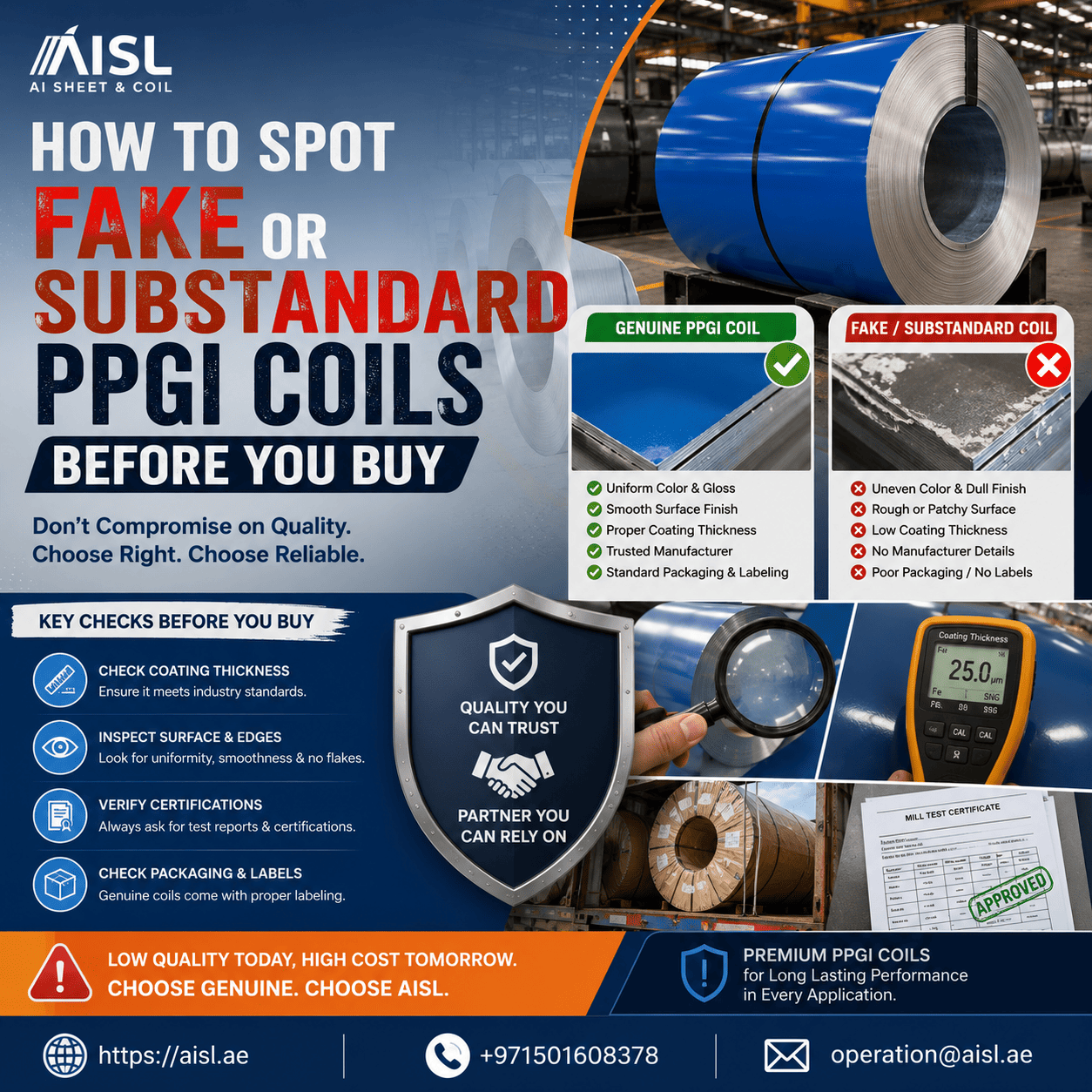
If you are a contractor, roofing installer, or procurement manager sourcing Prepainted Galvanized Steel Coils (PPGI) for a project in Kenya, Tanzania, the wider GCC, or South Asia, you have likely come across suppliers offering prices that seem too good to be true — and often, they are. Substandard PPGI coils cause premature rust, paint peeling, and roof failures within a year or two, long before the material should show any wear.
Why Substandard PPGI Is a Growing Problem in Export Markets
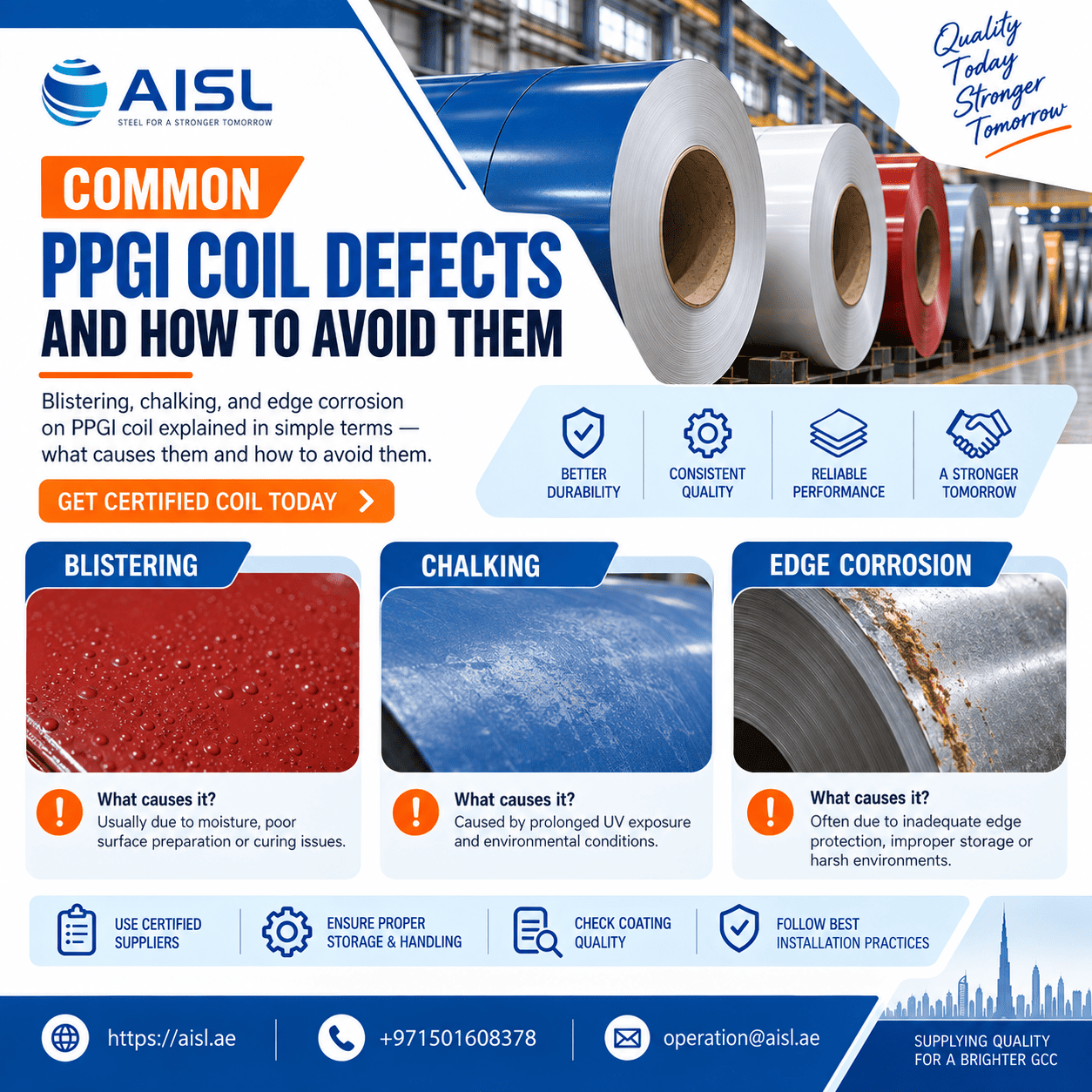
Coated steel is one of the most commonly misrepresented construction materials in fast-growing markets. Buyers in East Africa and South Asia often receive coils with thinner zinc coatings, diluted paint layers, or underweight cores than what was agreed at the time of order. Because the coil looks identical to a genuine one on the surface, the difference only becomes visible after installation — usually as rust spots along cut edges or paint flaking within months.
This matters more in coastal and high-humidity regions, where salt-laden air accelerates corrosion on any coil that does not meet its stated zinc coating weight.
Five Checks to Run Before You Buy
1. Verify the Zinc Coating Weight (GSM)
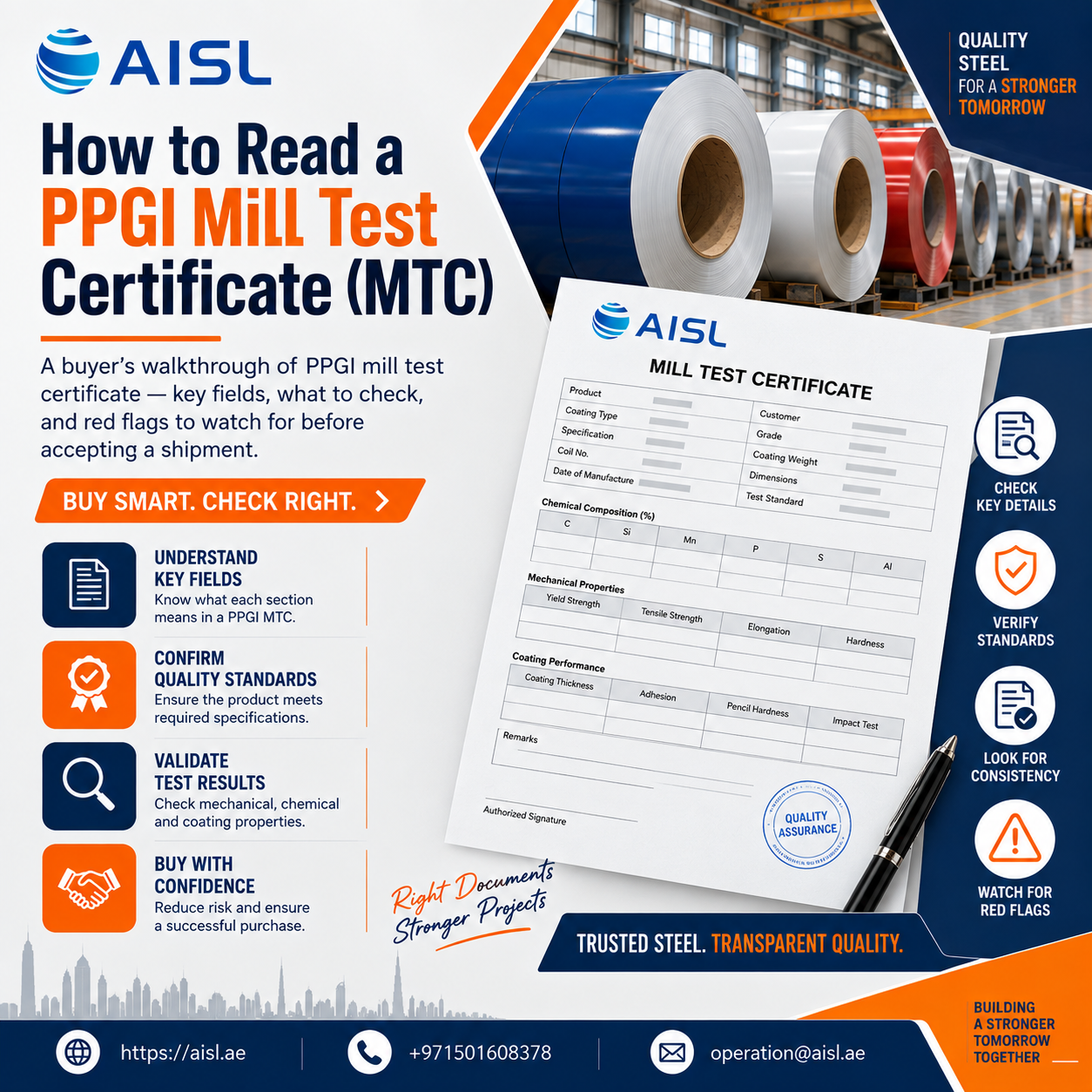
The zinc coating on a genuine PPGI coil is measured in grams per square metre (GSM), typically ranging from 120 GSM (G40) up to 275 GSM depending on the application. Always ask your supplier for a mill test certificate that states the actual GSM tested in a laboratory, not just a number printed on a datasheet. A coil with a coating below 120 GSM will corrode far faster than advertised, regardless of how good the paint finish looks.
2. Check the Actual Coil Weight Against the Stated Specification
A common shortcut used by unreliable suppliers is shipping coils that are lighter than the width, thickness, and length would suggest. Before accepting a shipment, weigh a sample coil and compare it against the theoretical weight for its dimensions — our steel coil weight calculator guide explains exactly how to do this calculation yourself. A gap of more than two to three percent between the stated and actual weight is a warning sign.
3. Inspect Paint Adhesion, Not Just Colour
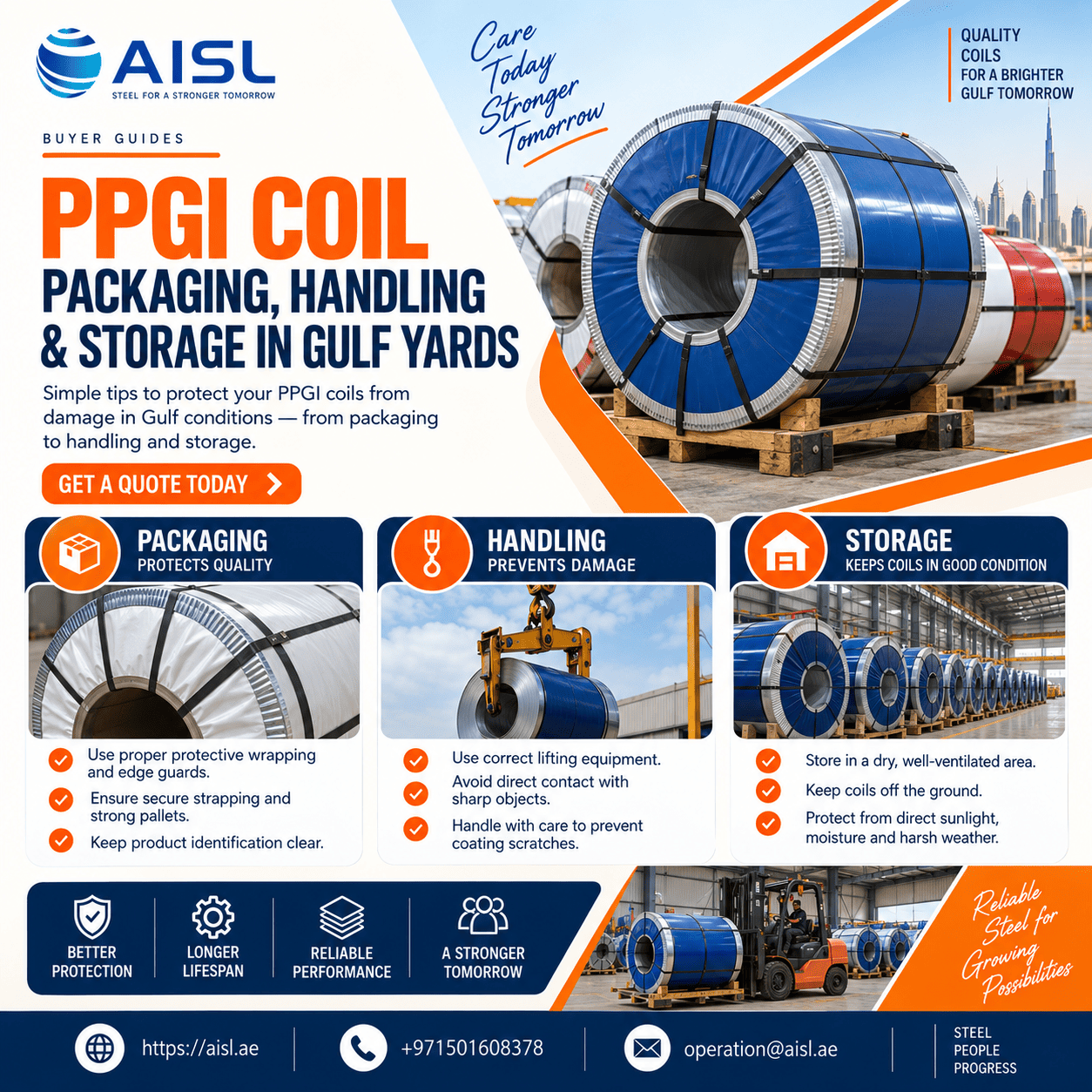
Genuine PPGI coils use a two-coat system — a primer layer followed by a top coat — cured at controlled oven temperatures. To test adhesion, apply a strip of adhesive tape firmly to the coated surface and pull it away sharply. If paint flakes off with the tape, the coating has not been cured correctly and will not withstand UAE or GCC heat over time.
4. Ask for Traceable Mill Certificates, Not Just Invoices
Every batch of genuine coated steel coil should be traceable back to a specific production run, with documentation covering the base metal grade, zinc coating class, and paint type used. If a supplier cannot provide this, or only offers a generic commercial invoice, treat this as a significant risk rather than a minor inconvenience.
5. Compare Certifications, Not Just Price
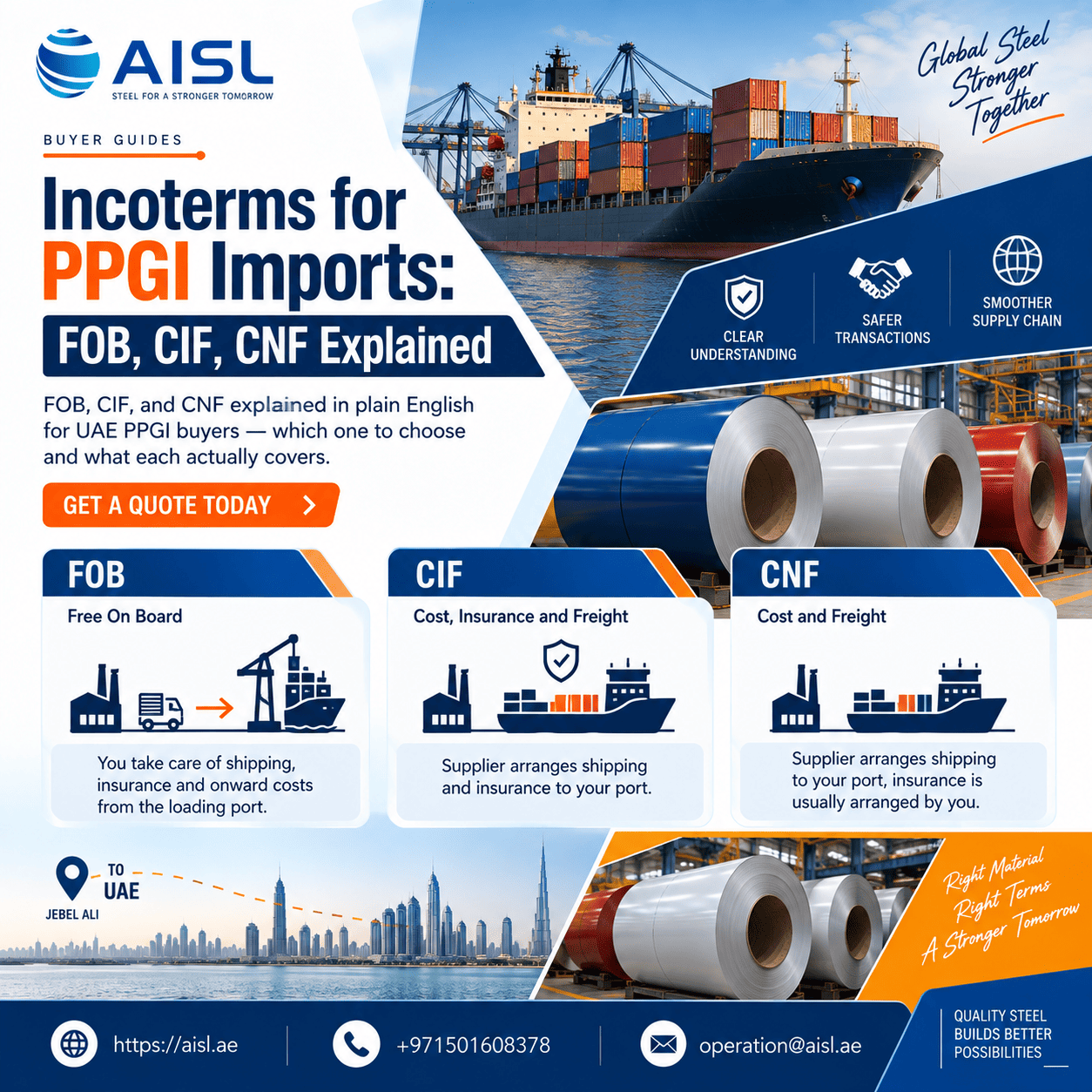
Reputable manufacturers hold internationally recognised certifications such as ISO 9001 for quality management and SASO certification for Gulf market compliance. These are not just paperwork — they indicate the manufacturer follows documented, auditable production and testing processes. A supplier unwilling to share these certificates is rarely a supplier worth the lower quote.
What Genuine PPGI Should Look and Feel Like
A correctly manufactured PPGI coil has a uniform, even colour across the full width of the sheet, a smooth or consistently textured finish with no visible primer bleed-through, and clean, rust-free cut edges straight from the factory. The coil should also match its declared thickness — typically between 0.20mm and 1.50mm for standard PPGI — when measured with a micrometre rather than estimated by eye.
If a sample coil fails more than one of the checks above, it is reasonable to ask the supplier for a replacement batch or full documentation before proceeding with a larger order.
Why Choose AISL for Genuine, Certified PPGI Coils?
Arabian Iron and Steel LLC (AISL) manufactures PPGI, PPAZ, and PPAL coils at our Continuous Color Coating Line in Umm Al Quwain, UAE, under ISO 9001, ISO 14001, ISO 45001, and SASO certifications. Every batch we produce is fully traceable, with zinc coating weights, paint specifications, and mill test certificates available on request — so you know exactly what you are installing before it leaves our facility.
We supply certified PPGI, PPAZ, and PPAL coils across the UAE, GCC, and export markets including Kenya, Tanzania, and South Asia, with the documentation to back every claim on the datasheet. If you would like a certified sample or a full mill test certificate before placing your next order, contact our team today.